
Lecce
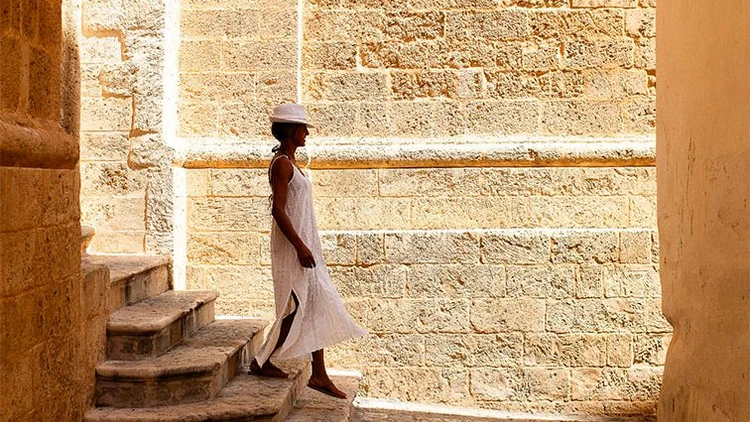
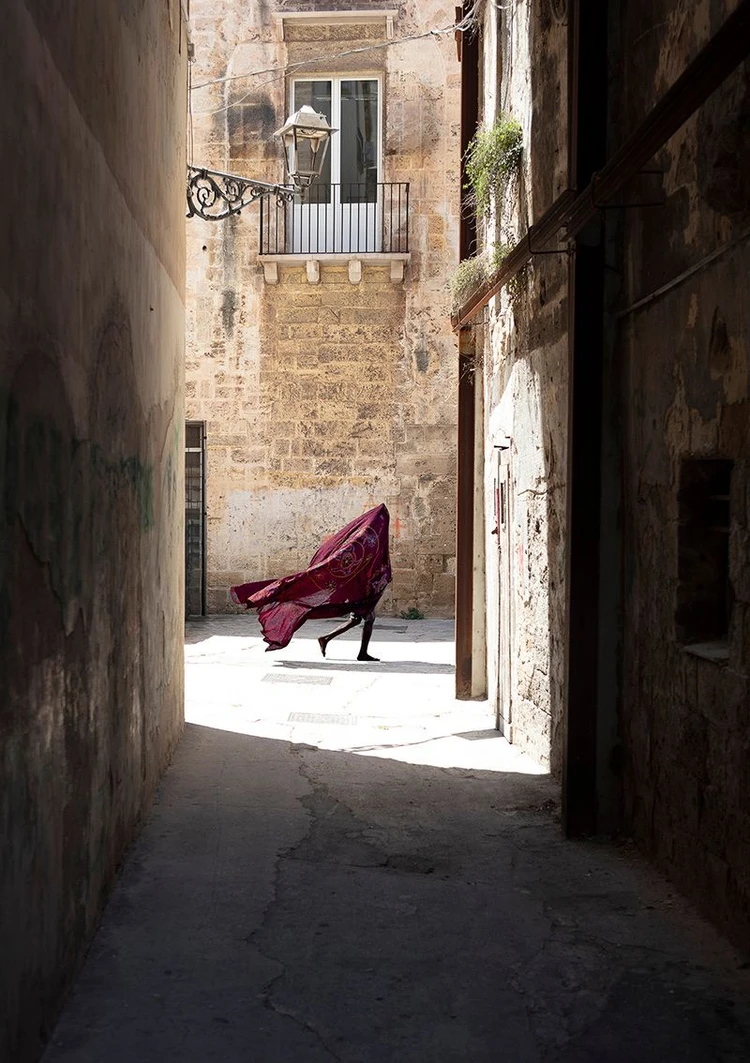
Known as "the Florence of the South", Lecce surprises, fascinates and wins you over with the archaeological remains of Roman domination and the exuberance of its seventeenth-century Baroque, here known as "Lecce Baroque", a unique expression of a popular language with Mediterranean roots. The comparison with Florence is slightly imprecise, as all comparisons between cities that do not really resemble each other tend to be. Lecce is warmer, more sun-drenched, more inclined toward excessive decoration that, strangely, never tires. Perhaps because it is built from Lecce stone, a material so soft and luminous that even the most redundant ornament looks light.
Baroque at its peak
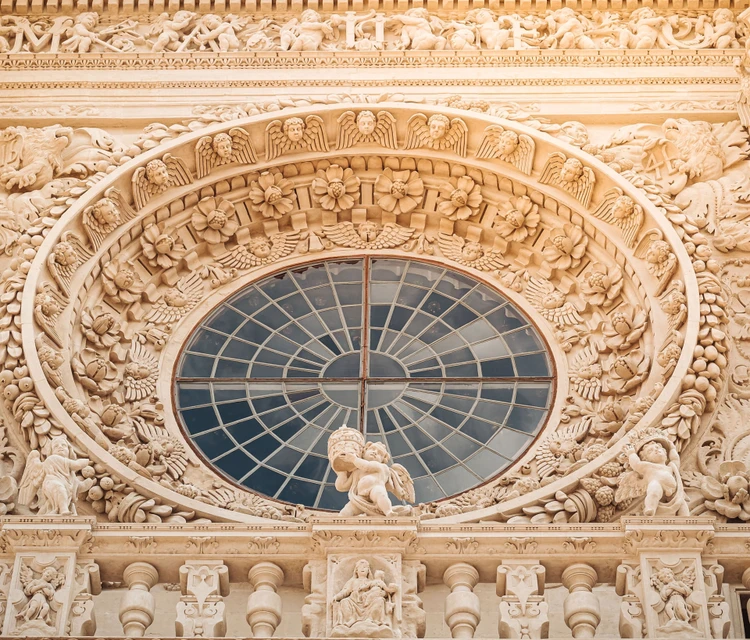
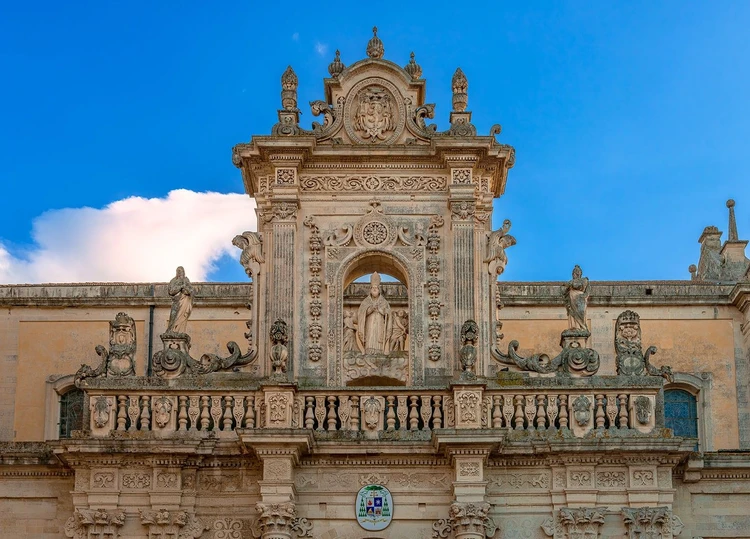
The Basilica of Santa Croce is the most significant example of Lecce Baroque, with façade decorations so lavish they leave you breathless. This is the point where Salentine Baroque stops being a style and becomes a declaration of intent. The central rose window is a vortex of friezes, but then your eyes move inevitably to the statue of Sant'Oronzo at the top, which seems to watch over the entire square. The interior, in a Latin cross plan, is more restrained but no less fascinating: the twisted columns of the high altar are a masterpiece of balance, and the light filtering through the windows creates evocative plays on the polychrome marbles. At sunset, the façade lights up with warm reflections that seem to come from within the stone itself.
the city's finest stage
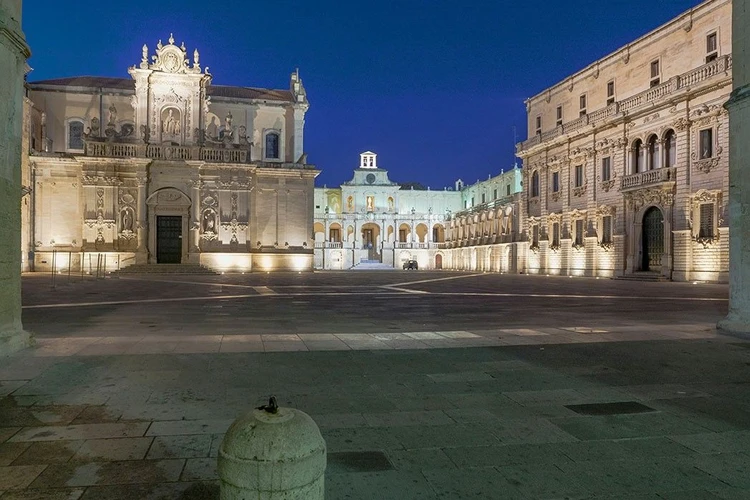
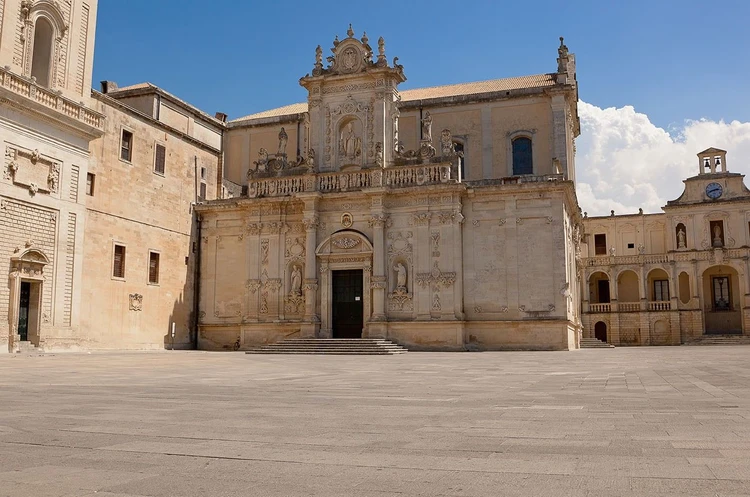
Arriving at the famous Piazza del Duomo, you immediately notice the sumptuous façade of the Cathedral and the Campanile rising 70 metres, the leading representatives of Lecce Baroque, alongside the Palazzo del Vescovado and the Palazzo del Seminario, now home to the Diocesan Museum of Sacred Art. It is a square enclosed on three sides, almost an outdoor auditorium, with a theatricality that seems to have been planned to the last detail. It probably was. In the seventeenth century, Lecce knew perfectly well what it was doing.
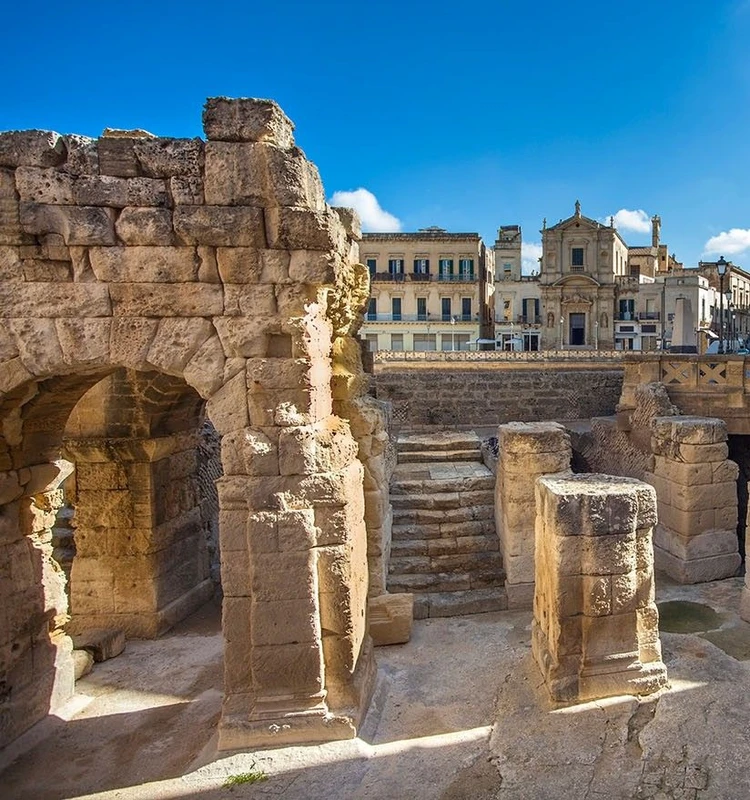
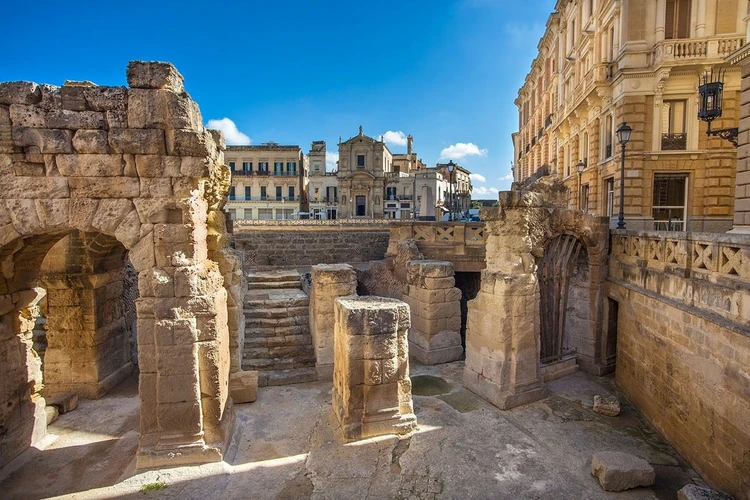
Walking through the centre of Lecce, among Baroque façades that look like lacework in stone, you come across something unexpected: a Roman amphitheater rising from underground, right in Piazza Sant'Oronzo. It is the kind of thing that makes you stop dead. The monumental structure, buried under rubble until 1901 and brought to light during excavations for the foundations of the Banca d'Italia building, is estimated to have held between 15,000 and 20,000 spectators. Lecce, in short, is not only Baroque. It is layered, it is ancient, it is the kind of city that reveals something new every time you dig.
Near Piazza Sant'Oronzo stands the Castle of Lecce, also known as the Castle of Charles V. In 1539 the king transformed the medieval stronghold into a full military fortress, capable of withstanding the fierce attacks of the Turks. Inside, alongside temporary exhibition spaces, you can visit the Chapel of Santa Barbara and the underground passage of the prisons, which offers a chill of darker history. After so much decorative exuberance, it is the stop that brings you back down to earth.
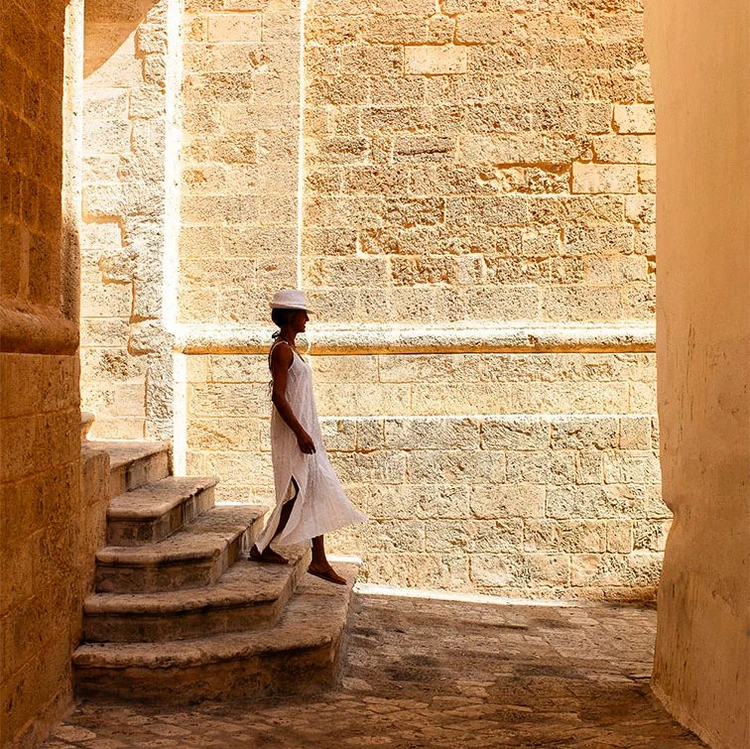
Along the pedestrian streets of the old town, numerous workshops for working Lecce stone follow one after another: a craft still alive thanks to the practical ingenuity and creativity of the master stonemasons. It is worth stopping to watch. It is worth understanding that what you see on the church façades was not printed – it was carved by someone's hands, one piece at a time, for months.
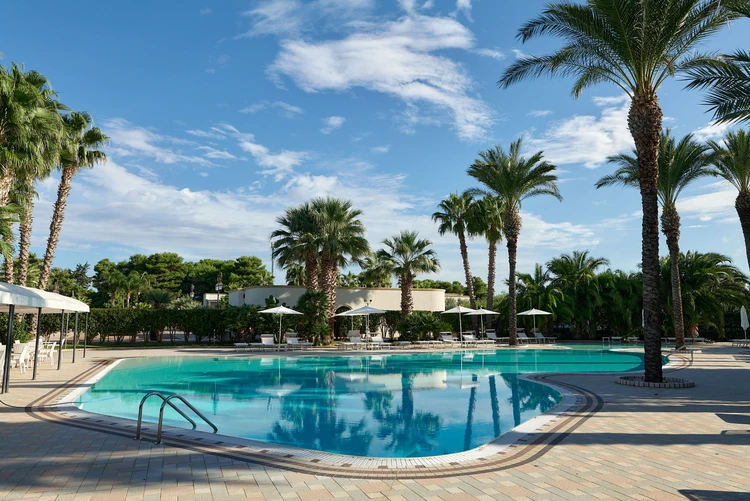
Book at least 20 days in advance for a minimum stay of 3 nights and receive a 15% discount
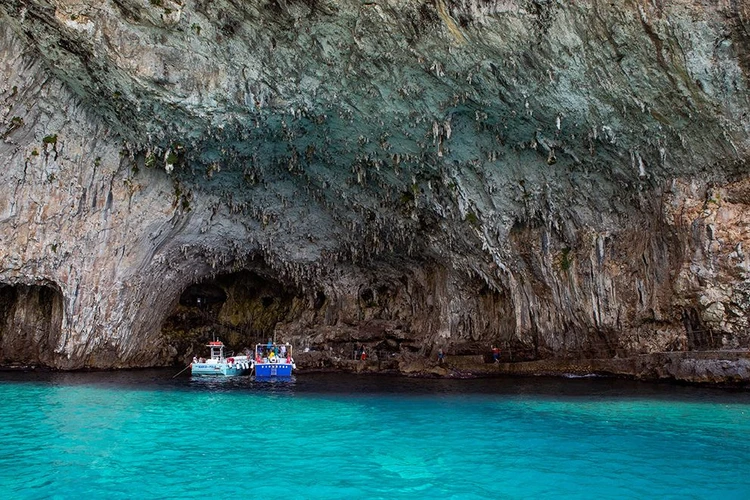
Book at least 60 days in advance for a stay of 6 nights and the seventh is on us.
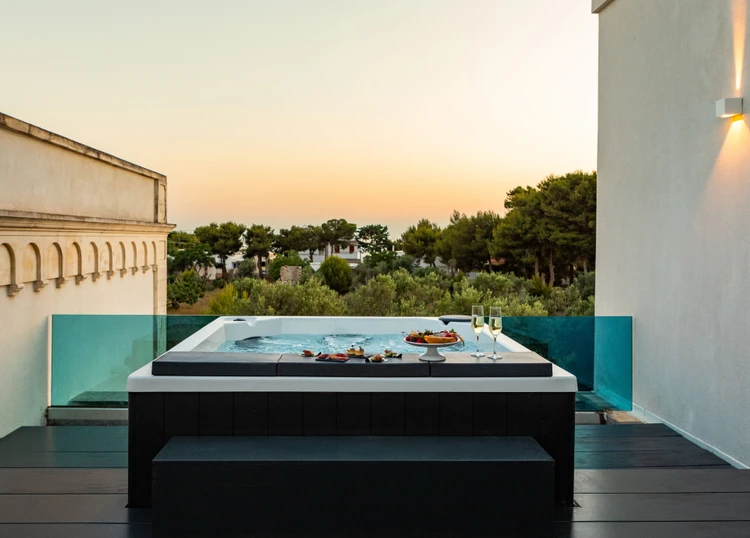
Two nights of relaxation and pleasure, with aperitivo, tasting dinner and a wellness circuit at the Spa
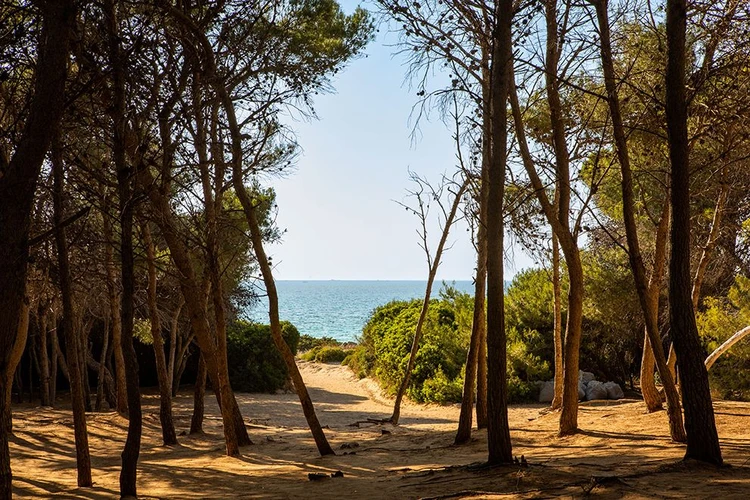
7 discounted nights to experience a summer among the nature and crystal-clear waters of Salento
We are always here for you, for any information you need and to design your travel experience together.