
OurStory
Via San Nicolò, 25.
A street number worth more than it seems. We have been here since 1875, and in all this time we have done one thing only: stayed. The rest has come by itself.
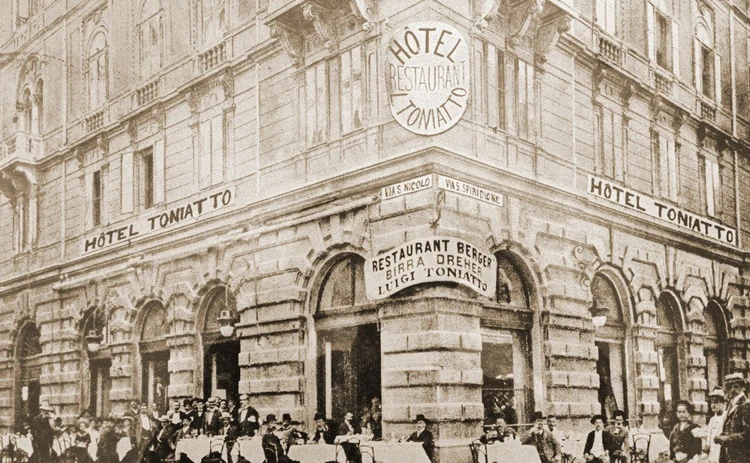
The building was already there from 1875, designed by architect Giovanni Righetti on land that had previously belonged to Jewish families, built with that austere composure still recognisable today: four floors, wide windows at the corners, biforate windows on the balconies surmounted by medallions with profile portraits, like silent witnesses looking out onto the street. Since then the name has not changed. Two wars, Trieste becoming Italian, an entire century. The Continentale has always been right here.
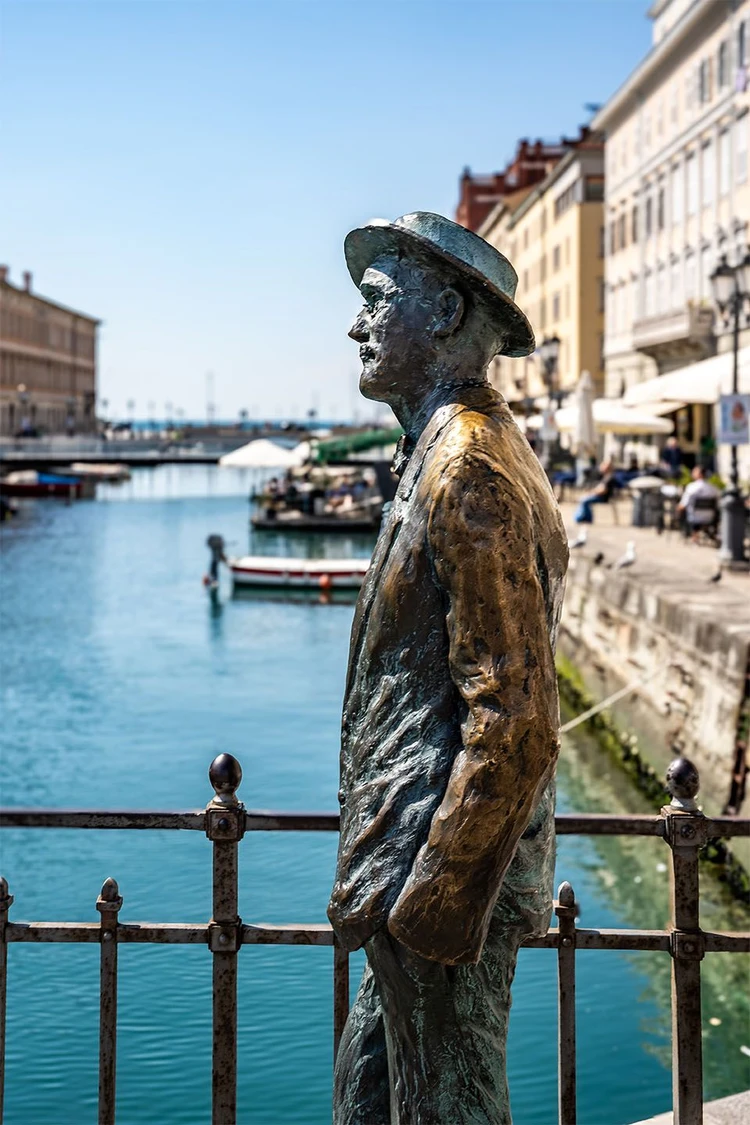
Between these walls the Consommé Italia was born. Here the Dolce Vittoria was conceived. But the densest history that Via San Nicolò holds is literary: this is the street where modern literature found its sap, its silence and its warm coffees. James Joyce arrived in Trieste in 1904 with his companion Nora and little money in his pocket, looking for work at the Berlitz School. He found a border city, shifting, that belonged to no single language, perfect for those who wanted to disappear and write. Right here, opposite Hotel Continentale, parts of what would become Ulysses matured. At the Berlitz School he met Italo Svevo, then still Aron Hector Schmitz, a company executive with two novels ignored by the critics and a passion for fiction he was almost abandoning. It was Joyce who restored his confidence. Svevo found in that bourgeois, ironic and Mitteleuropean city the perfect context for La coscienza di Zeno, his masterpiece. Umberto Saba, born in 1883 in the Jewish quarter of Trieste, did not arrive from outside: he was from here, and it showed. He opened his Libreria Antiquaria right opposite us, frequented it every day for the rest of his life, alongside the Caffè Tommaseo and the Caffè Latteria da Walter. For him Trieste was not a backdrop. It was the very material of his Canzoniere.
The poet and his lover
The most novelistic story, however, is the one that begins right here inside the Continentale. It was the 7th of July 1878 when Giosuè Carducci arrived in Trieste in strictest incognito, after a dense exchange of secret letters, with his muse Lina, in real life Carolina Cristofori in Piva, mother of three children and wife of a civil servant from Rovigo. The hotel was still called Al Buon Pastore, and for a clandestine couple it was more than adequate. The day after their arrival, a journalist from L'Indipendente discovered them. The news spread in a flash. So much for anonymity: Carducci found himself visiting Miramare, San Giusto and Capodistria followed by festive and curious crowds, with two local companions doing their best to act as a shield. He left on the 11th of July amid a chorus of farewells. He never came back. Evidently, unwanted notoriety was not among the things he appreciated.