
Stay one more night
Stay at least 3 nights: breakfast is included and you get an 8% discount on our rate
Trieste seems to have in its very nature an almost magnetic force of attraction, which has always held onto sensitive and avant-garde personalities. It puts them in front of the sea. It forces them to look inward. Here literature is not a chapter of the past: it is a presence that still walks the streets, sits at café tables, enters bookshops. Via San Nicolò is proof of this. Hotel Continentale has been there for over a century, and in all that time it has seen poets in flight, writers in search of themselves, clandestine loves that hoped for anonymity pass by.
One of the most unexpected stories linked to our hotel dates back to when the Continentale was still called Al Buon Pastore. It is the 7th of July 1878 when Giosuè Carducci arrives in Trieste in great secrecy, after weeks of dense, clandestine letters, accompanied by Lina, the affectionate name of Carolina Cristofori Piva. She is married, the mother of three children; he is the most closely watched poet in Italy. Trieste was supposed to be a refuge and a parenthesis, a discreet space in which to escape prying eyes. But the following day a journalist from L'Indipendente recognises them, and the secret lasts as long as a summer morning. From that moment the city lights up with curiosity. Carducci visits Miramare, San Giusto and Capodistria followed by admirers, impromptu greetings and ever-growing crowds. At his side, as guides, two illustrious names of the Trieste of the time: Hortis and Caprin. He departs on the 11th of July, amid applause and calls from the crowd. He will never return. He must have found Trieste beautiful, certainly, but a little too salon-like.
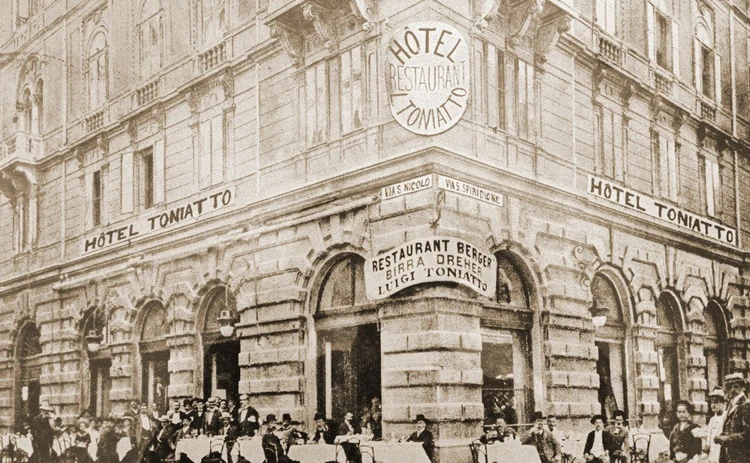
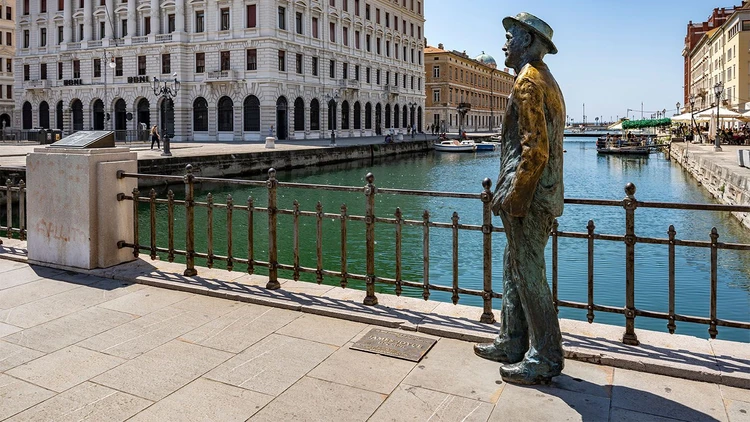
When James Joyce arrived in Trieste in 1904, he was looking above all for work. He brought with him Nora, little money and the still uncertain idea of teaching English at the Berlitz School. He found much more instead: a city capable of resembling him. Trieste, at the time, was a border in motion. A place made of intertwining languages, shifting identities, commerce, continuous passages. It did not belong entirely to anyone and for that very reason it welcomed many. For Joyce it was fertile ground: complex enough to stimulate him, free enough to let him be. He taught English, first at Berlitz and then at the Scuola Revoltella. He collaborated with Il Piccolo. He walked, observed, listened. He frequented theatres, cinemas, port streets and above all the cafés where still-formless ideas began to take shape. Even in the surroundings of Hotel Continentale, between tables and notebooks, pages matured of what would become Ulysses. Trieste offered him two rare luxuries: anonymity and freedom. Here he could work without being interrupted by the noise of the world. Here he could change form. When he left, he wrote: "My soul is in Trieste." The city, for its part, did not forget: it dedicated a statue to him, a museum, and that kind of memory that continues to walk the streets. In addition to the famous 16th of June, Bloomsday, which is celebrated here every year with events around the city. For us, new Ulysseses of today.
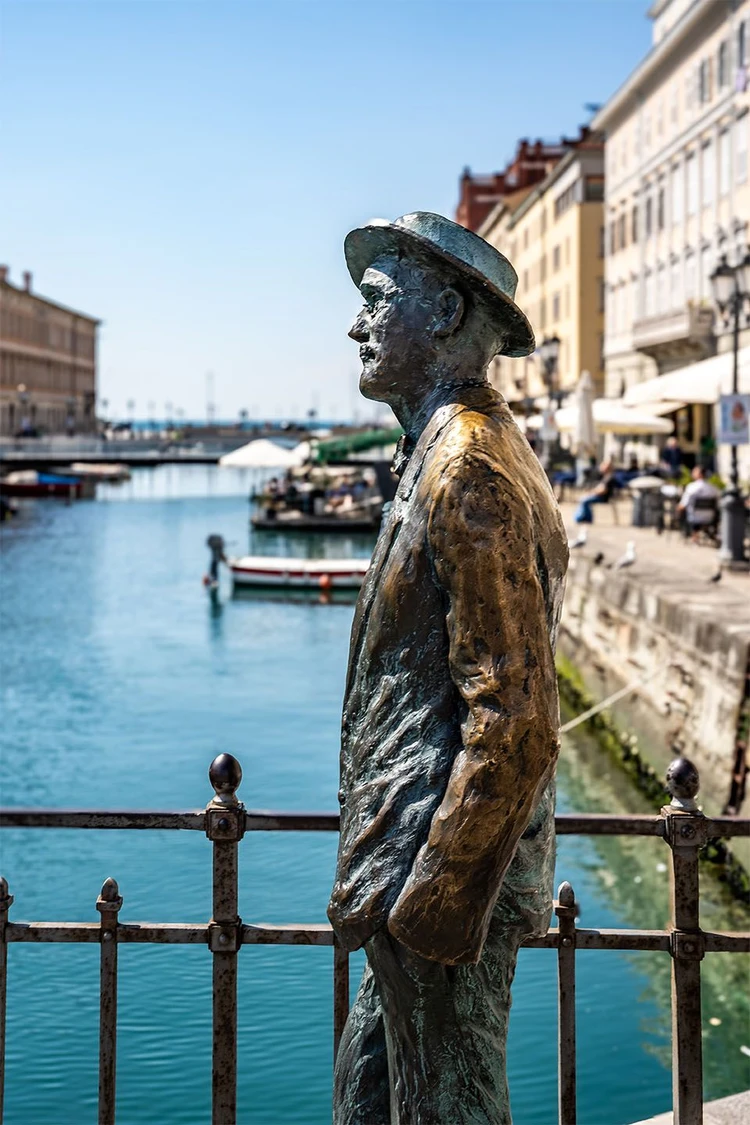
At the Berlitz School, Joyce met a pupil who would become his closest Triestine friend: Aron Hector Schmitz, whom the world knows as Italo Svevo. Born in 1861 into a middle-class Jewish family, Svevo had spent almost two decades at the Trieste branch of a Viennese bank, secretly cultivating his true passion. He had already published two novels, Una vita and Senilità, received with indifference by the critics. He had almost stopped believing in himself. It was Joyce who restored his confidence. The Irish author read his texts, encouraged him, pushed him to continue. Svevo reciprocated by helping him obtain his post at the Scuola Revoltella. In the meantime, work took him elsewhere: he had become a manager in the paint company belonging to his wife Livia Veneziani's family, he travelled frequently abroad, living that double life between commerce and literature that Trieste seemed to impose on its intellectuals. La coscienza di Zeno, his masterpiece, is the product of this tension, as well as of the discovery of Freudian psychoanalysis. It was published in 1923, and this time the world listened. He died in 1928, finally recognised. Trieste remembers him with a statue and a museum.
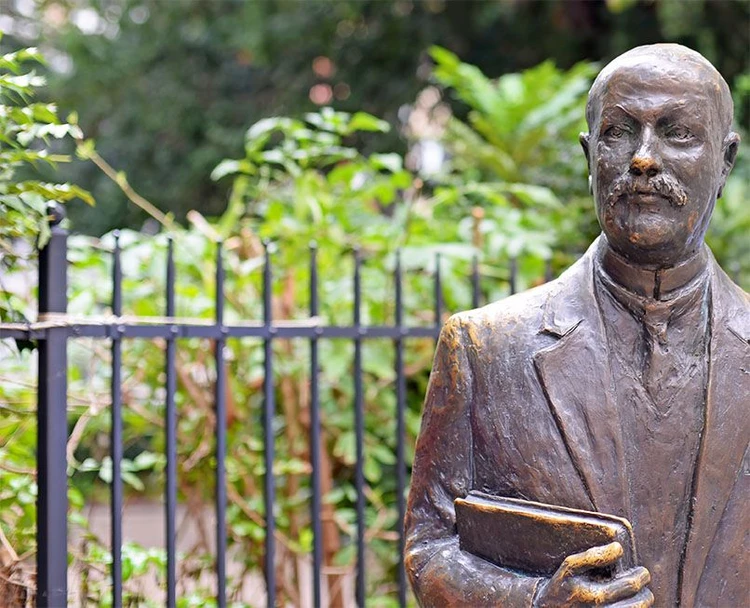
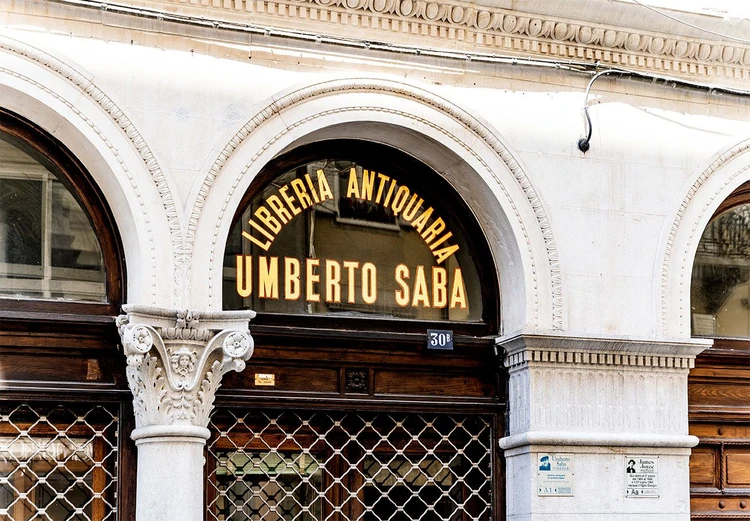
The most Triestine of all, however, is Umberto Saba. Born in 1883 in the Jewish quarter of the city, he never looked at Trieste from outside as Joyce did, nor inhabited it with the duplicity of Svevo. He recognised it. He loved it with an almost domestic devotion, in the working-class districts, the ports, the afternoon shadows. His life was marked from the beginning by a fracture: his mother entrusted him in his earliest years to a Slovenian Catholic wet nurse, and that early separation left a trace that resurfaces in almost everything he wrote. After his studies in Pisa and a few years of wandering, in 1919 he opened his Libreria Antiquaria, which became his occupation for his entire adult life, alongside writing. He frequented daily the Caffè Latteria da Walter, opposite the bookshop, and the Caffè Tommaseo, which he cites in his writings under its old name of Caffè dei Negozianti. In 1921 the first version of his Canzoniere was published, the collection of all his poetic output, on which he continued to work for the rest of his life. The first manuscript, the 1919 Canzoniere, is held at the Biblioteca Civica di Trieste. His bookshop is still there. Small, dense with paper and silence, right in front of the outdoor terrace of the Hotel Continentale. To enter it is to cross a thin threshold. You do not go there to buy a book. You go there to understand what Saba meant when he wrote about this city.
Stay at least 3 nights: breakfast is included and you get an 8% discount on our rate

We are always available to answer your questions and help you design your journey together.