


Tram di Opicina
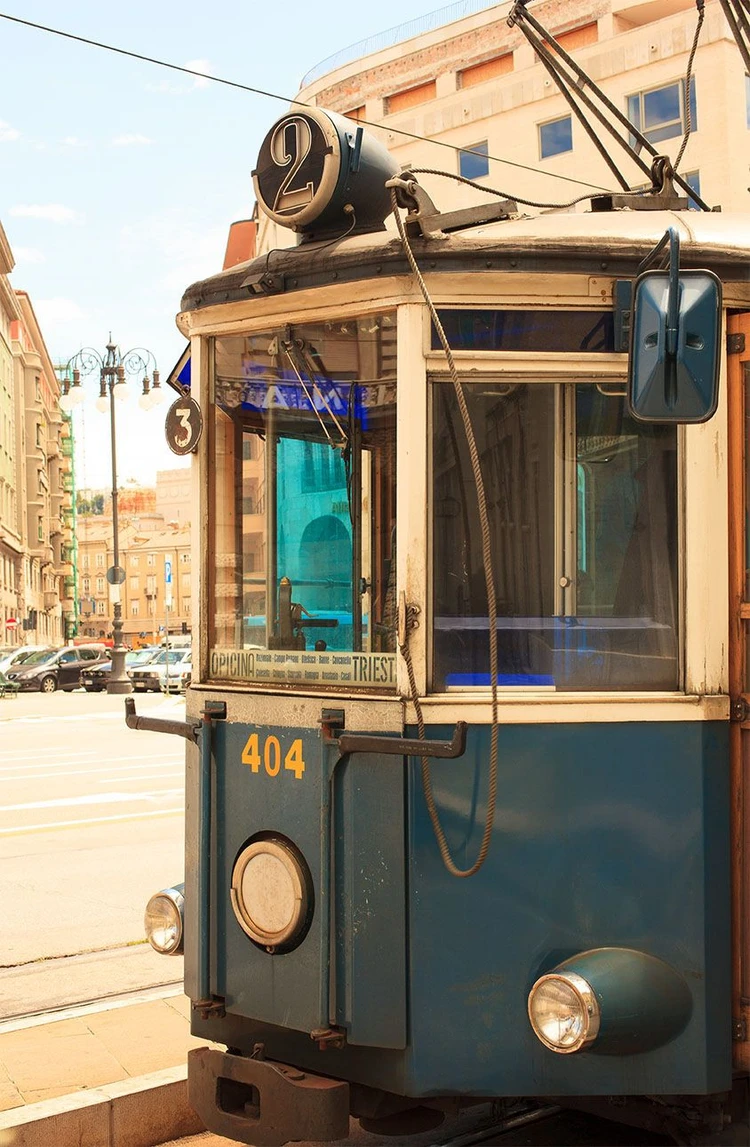
The Tram di Opicina connects the centre to the Karst with an ancient, almost stubborn movement. It sets off from the city, passes through quiet neighbourhoods, then climbs the gradient with its historic rack-and-pinion system. It is not simply a means of transport. It is a literal ascent. As the tram climbs, the sea draws away and simultaneously expands. The rooftops become a pattern. Inside, the wooden seats and wide windows frame the regular sound on the rails, which immediately carries the mind back to the early 1900s. You stay seated, but your gaze and imagination do the work. Arriving in Opicina, the air is drier. The Karst opens up the space. The paths begin just beyond the stop. The city remains visible, but distant. Trieste is this too: sea and plateau in the same horizon.