Piazza Unità d'Italia
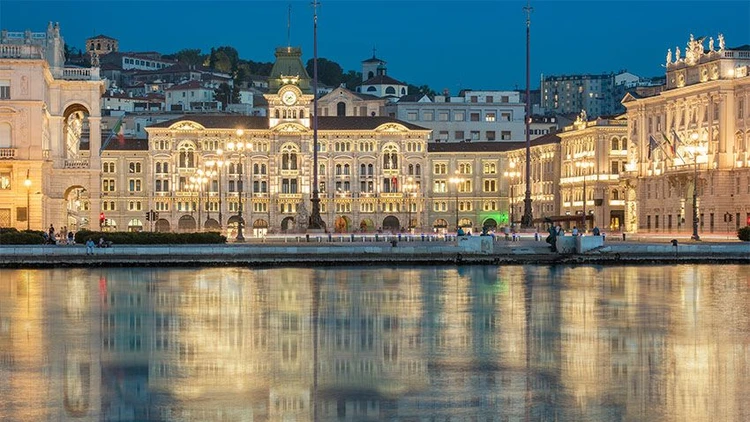
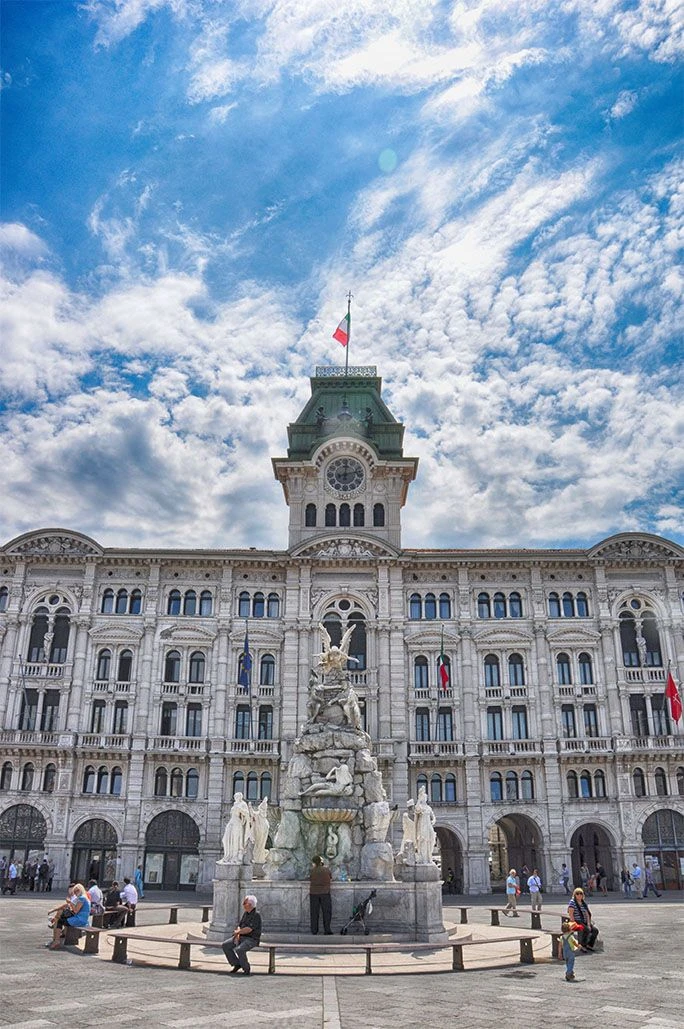
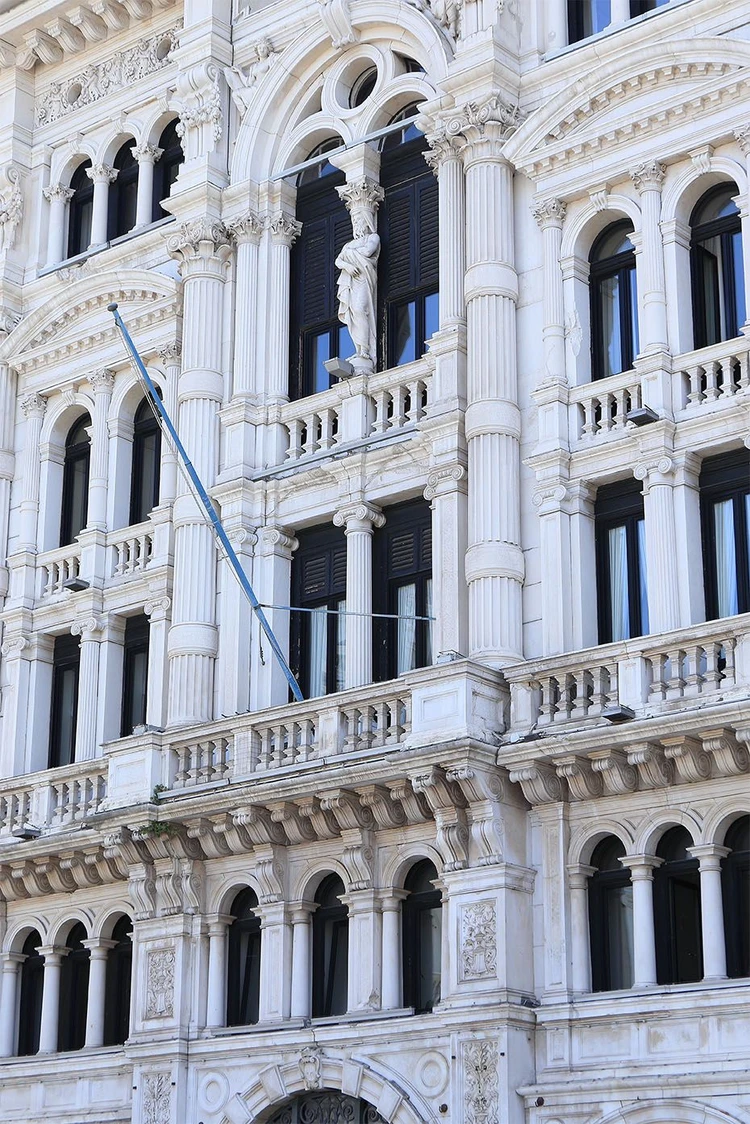
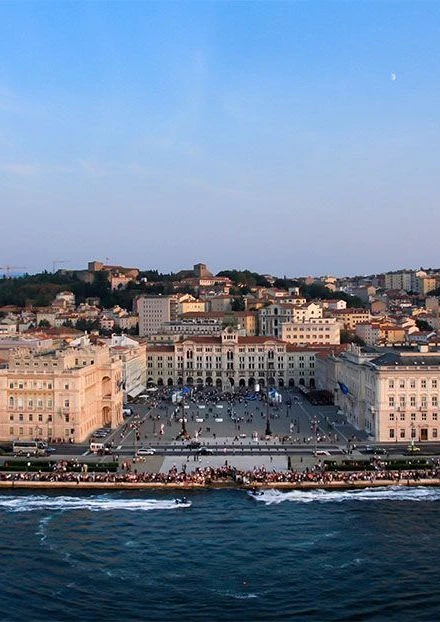
Squares usually close a space. This one opens it instead. Piazza Unità d'Italia is the city's finest drawing room. It has no fourth wall. There is no palace in front of it, no street. There is the sea. The Adriatic enters the gaze without obstacles, and the city seems to breathe together with the water. Yet here, once, the sea was closer. Where today, in the evening, blue lights draw thin lines on the ground, there was once a mandracchio. A small inner harbour. Moored boats, quick exchanges, a briny smell mixed with goods. The square was not yet a square. It was an operational edge, a threshold between land and water. Trieste grew like this. Through stratifications. With the filling in of the mandracchio, the space expanded. The widest square in Europe overlooking the sea took shape. Of a disarming architectural harmony, its palaces entering into a silent dialogue with one another. The Palazzo del Municipio occupies the central position. Eclectic lines, clock tower, statues that mark the time. It is the building that organises the gaze, without imposing it. To its right extends the Palazzo del Lloyd Triestino, today the seat of the Region. Born for a shipping company, it speaks of Trieste's deep bond with maritime commerce. Its solid forms speak of routes, insurance, long voyages. Nearby, Palazzo Stratti introduces a more ornamental note. Under its arcades you enter the historic cafés, in a natural continuity between piazza and interiors. Every building is a child of the Habsburg era. Contained elegance. Rigorous proportions. Richly adorned, but never redundant. Trieste has never needed to exaggerate, always finding its place in the middle. And it chose to celebrate that measure. Trieste is a city of balance. Between land and sea. Between empire and everyday life. Piazza Unità d'Italia is its clearest synthesis. A space born from water. Remodelled by history. Open, still today, toward the horizon.